
Things to Do in Siem Reap in July
July weather, activities, events & insider tips
Low Season · Budget Friendly
July Weather in Siem Reap
Long-run averages for July
89°F (32°C)
High Temp
77°F (25°C)
Low Temp
9.5 inches (241 mm)
Rainfall
82%
Humidity
12
Sunny-Day UV
⚠ Afternoon thunderstorms can produce intense lightning. Avoid exposed high points like Phnom Bakheng's summit temple during active storms. Descend immediately if you hear thunder while climbing any of the pyramid temples. Your safety comes first.
⚠ Mosquito activity increases significantly during wet season, and dengue fever is a real risk in Siem Reap province. Standing water around temple moats and jungle ruins creates prime breeding habitat. Apply repellent at dawn and dusk. Consider permethrin-treated clothing if you are spending extended time at overgrown outer temples.
⚠ Unpaved roads to outer temple sites like Beng Mealea (68 km / 42 miles east) and Koh Ker (120 km / 75 miles northeast) can become rutted and partially impassable after sustained heavy rain. Check road conditions with your driver or guesthouse the morning of any planned day trip to outlying ruins. Build a backup plan around the paved-road temples of the main Angkor complex. Stay flexible.
Making the most of July in Siem Reap? Browse tours and activities in Siem Reap on GetYourGuide.
Is July Right for You?
Weigh the advantages and considerations before booking
Advantages
- + By July, Angkor Wat's moats brim with water, throwing back mirror-sharp reflections of the five towers against monsoon-dark skies that dry-season visitors never see. The sandstone takes on a deeper honey color when clouds stack behind it. Photographers who know their craft time trips to wet season for exactly this reason. Worth it.
- + Crowd levels drop to a fraction of the November-through-March peak. You can walk Bayon's corridors alone, stand before Ta Prohm's strangler figs in silence, and hear the forest instead of selfie negotiations. At some outer temples, you may be the only visitor for an hour. Skip the crowds.
- + Low-season accommodation and guided tours run considerably cheaper than the cool-season peak. This stretches your budget across multi-day temple passes, private guides, and boutique guesthouses that would cost twice as much in January. Your money goes further.
- + The Cambodian countryside becomes a luminous green canvas of flooded rice paddies and swollen rivers. Every tuk-tuk ride between temples feels like moving through a landscape painting. Buddhist Lent ceremonies beginning in July open a window into local spiritual life that high-season crowds obscure. Time it right.
Considerations
- − Afternoon downpours arrive with little warning and can be torrential. 241 mm (9.5 inches) of rain across the month turns unpaved roads near outer temples like Beng Mealea to thick red mud. When storms hit mid-visit, you are stuck under whatever overhang you find until they pass. Pack rain gear.
- − Humidity sits at a punishing 82% on average. Walking the 400-hectare (988-acre) Angkor Archaeological Park becomes a genuine endurance test past mid-morning. The combination of 32°C (89°F) heat and saturated air drains you faster than most first-timers expect. Start early.
- − Some boat-dependent excursions to Tonle Sap's more remote floating communities may run reduced schedules early in July before water levels fully rise. A few dirt-road outer temples become difficult to reach without a vehicle with decent clearance. Plan accordingly.
Settled on July? Compare hotel prices in Siem Reap for your dates on Trip.com.
Best Activities in July
Top things to do during your visit
July drops Siem Reap into the thick of the wet season, and the city transforms. Afternoon cloudbursts roll in most days, expect around 9.5 inches of rainfall across the month. But they arrive in concentrated downpours that rarely last more than an hour or two before the sky splits open again into white-gold light. Mornings tend to start warm and overcast, the air heavy with the scent of damp laterite and frangipani, temperatures climbing toward a high around 32°C before the rain resets everything. By evening the stone courtyards of the old French Quarter steam gently, tuk-tuk drivers drape plastic sheeting over their carriages, and the night market stalls along Sivatha Boulevard send up plumes of charcoal smoke from grills loaded with skewered pork and dried squid. The wet season keeps Siem Reap noticeably quieter than the packed November-to-March high season, which means shorter queues at ticket counters and elbow room on causeways that are otherwise shoulder-to-shoulder. What the rain gives Siem Reap is water. The moats around Angkor Wat fill to their brims and mirror the towers in glassy reflections that the dry months cannot deliver. Tonle Sap Lake begins its annual expansion, swelling from its low-season basin into a vast inland sea that floods the surrounding forest, the stilted fishing villages ride higher, and the flooded mangrove canopy turns a saturated green that hums with cicadas and the slap of oars. Rice paddies on the road to Banteay Srei stand shin-deep, their shoots electric green against red-brown dikes, and the countryside feels lush and alive in a way that January's dusty plains do not. Travelers who arrive in July find a Siem Reap that runs at a different tempo: slower, wetter, less performative, and arguably more honest about the place it is, a river-fed lowland town where the seasons dictate everything from what the markets sell to how high the water sits under the wooden houses along the Siem Reap River. Planning a Siem Reap itinerary around the rain is straightforward. Start temple visits at dawn, when the stones are cool to the touch and the light cuts low through doorways. Use the midday heat for a long lunch, the city's restaurant scene runs deep, from Khmer home-style spots in the backstreets to contemporary kitchens working with foraged ingredients from the Kulen hills. When the afternoon storm arrives, wait it out with an iced coffee or a foot massage, then head back out in the golden post-rain hour when the moss on the temple walls practically glows. Hotels in Siem Reap drop their rates substantially in the wet season, and the best accommodations, converted colonial villas with courtyard pools, boutique guesthouses tucked into mango orchards east of the river, become accessible at a fraction of what they command in December. Whether you have two days or a full week, July rewards flexibility and a willingness to get your shoes muddy.

Siem Reap Angkor Airport Taxis (from Airport to Hotel)
transportThe drive from Siem Reap's Angkor International Airport into town is only about twenty minutes. But arriving into Cambodia for the first time, jet-lagged, clutching a fresh visa stamp, the last thing you want is to negotiate a fare in a language you do not speak, in rain-slicked darkness if your flight lands after sunset. This pre-booked airport taxi removes that friction entirely: a driver meets you at arrivals holding your name, loads your bags into an air-conditioned sedan, and delivers you directly to your hotel lobby. In July, when sudden downpours can turn the airport forecourt into a puddle-strewn scramble of tuk-tuks and motos, having a covered vehicle waiting is a genuine comfort rather than a luxury.
Eliminates the single most stressful moment of arriving in a new country, the airport-to-hotel transfer, and does it with a driver who knows every Siem Reap hotel by name.
Insider tip: If your flight arrives after dark, confirm your hotel address in Khmer script on your phone to show the driver, GPS coverage along the smaller sois near the river can be unreliable, and a screenshot of the map pin saves a circuitous route.
This month: July afternoon storms can delay flights into Siem Reap; a pre-booked transfer means your driver waits regardless of arrival delays, unlike a tuk-tuk arranged on the spot.

Private 3-Days tour at comfortable areas
guided_experienceThree days with a private guide through Siem Reap's comfortable circuit, the well-maintained major temple complexes, the town itself, and the surrounding countryside, is the format that lets you absorb the place without punishing your knees on uneven stone. The itinerary typically covers the grand Angkor temples on day one, the outer ring and Banteay Srei's rose-pink sandstone carvings on day two, and Tonle Sap's floating communities on day three. Your guide drives the route and pacing, which in July means starting early to catch the cool morning hours when the lichen-covered galleries of Bayon smell of damp earth and bat guano, the carved faces emerging from the mist like something half-dreamed. On the Tonle Sap day, the lake is swelling toward its monsoon peak, and the stilted villages feel alive, fishing nets strung between houses, children paddling aluminum basins like canoes, the water itself a milky ochre from upriver sediment.
A private guide over three days means you absorb the temples at your own pace, skip nothing essential, and get local context that transforms carved stone into lived history.
Insider tip: Ask your guide to include a stop at Preah Khan in the late afternoon on your outer-circuit day, the galleries flood with amber light through the collapsed roof sections, and in July you will likely have entire corridors to yourself.
This month: The wet season means Tonle Sap Lake is rising rapidly in July, making the floating village portion of the itinerary more dramatic, water levels are visibly higher than in the dry months, and the flooded forest canopy is navigable by boat.

From Siem Reap: Angkor Wat and Floating Village 3-Day Trip
day_tripThis three-day trip pairs the Angkor temple complex with the Tonle Sap floating village, and the combination is sharper in the wet season than most visitors expect. The temple days follow the classic sunrise-at-Angkor-Wat opening, you stand on the western causeway in the dark, listening to the croak of frogs in the moat, and watch the towers resolve against a sky that shifts from charcoal to peach, then move through Angkor Thom's south gate, where the stone faces of the Bayon loom overhead, slick with rain and spotted with orange lichen. The floating village day takes you onto Tonle Sap proper, where July's rising waters have pushed the lake's edge deep into the surrounding floodplain forest. The air smells of fish paste and wet wood, longboats cut between the stilts of houses standing in three meters of water, and the horizon line dissolves into a haze where sky and lake merge into the same shade of pewter.
Combines the two defining experiences of Siem Reap, Angkor's stone monuments and Tonle Sap's water world, in a single guided itinerary that handles logistics across three days.
Insider tip: Bring a dry bag for your camera and phone on the Tonle Sap day, the boats throw spray, and July squalls can arrive mid-lake with almost no warning. A waterproof phone pouch also keeps condensation from fogging your lens in the humid air.
This month: Tonle Sap's water level in July is significantly higher than during the dry season, which changes the landscape, the flooded forest becomes accessible by boat, and the fishing villages sit deeper in open water rather than on mudflats.

Private Temples Guided Tour (Angkor Wat, Ta Prom & Angkor Thom)
culturalA private guided tour of Angkor Wat, Ta Prohm, and Angkor Thom covers the three temples that define Siem Reap's identity, and doing it with a dedicated guide, rather than trailing a group of thirty through the galleries, means you can linger where the light is good and skip what does not interest you. Angkor Wat itself needs no introduction beyond the physical experience: the cool sandstone under your palms as you climb the steep central staircase, the smell of incense drifting from a small shrine where a saffron-robed monk sits cross-legged, the bas-reliefs of the Churning of the Sea of Milk stretching for forty-nine meters along the east gallery wall, every figure worn smooth by eight centuries of passing hands. Ta Prohm is the temple the jungle refused to release, silk-cotton trees grip the walls with root systems as thick as a person's torso, prying apart the stone block by block, and in the wet season the moss and ferns that cover every surface turn the ruins into something that feels wild. Angkor Thom rounds out the day with the Bayon's 216 stone faces, each wearing that ambiguous half-smile, water streaming down their cheeks after a passing shower.
These three temples are the reason Siem Reap exists as a destination, and a private guide lets you experience them at your rhythm rather than a tour operator's schedule.
Insider tip: At Ta Prohm, walk past the famous "Tomb Raider doorway" where everyone queues for photos and continue to the eastern gopura, the tree roots there are equally dramatic, the crowds thin to almost nobody, and the sound of rain dripping through the canopy onto stone is the only thing you hear.

Private One-Way Arrival/Departure Transfer (REP airport and Siem Reap town).
otherGetting between Siem Reap's airport and the town center is a short ride, no more than half an hour even in traffic. But the transfer matters disproportionately at the bookends of a trip. This private one-way service covers either direction: arrival or departure. The vehicle is air-conditioned, the driver tracks your flight time, and you avoid the scrum of competing tuk-tuk touts outside the terminal. It is the most budget-conscious private transfer option in Siem Reap, and it does exactly one thing well. In July, when the road between the airport and the central hotel district can flood briefly during heavy afternoon rain, having a driver who knows which stretches to avoid and which alternate routes stay passable is a practical advantage, not a marketing line.
The lowest-cost private transfer between the airport and your Siem Reap hotel, with door-to-door service and flight tracking so the driver adjusts to delays.
Insider tip: Book the departure transfer for at least three hours before your flight, Siem Reap's airport is small and check-in is quick. But July rain can slow the road, and arriving with time to spare beats sprinting through security.
This month: July's heavy afternoon rainfall can temporarily flood low sections of the airport road; a driver familiar with Siem Reap's wet-season routing avoids the worst spots.

2-Day Private Angkor Wat, Floating Village & Countryside Tour
guided_experienceTwo days, private vehicle, a guide who speaks your language, this tour covers the Angkor temple complex on day one and pivots to Tonle Sap's floating village and the Cambodian countryside on day two. The temple day moves through the main circuit: Angkor Wat's five towers reflected in the moat, the claustrophobic corridors of Ta Prohm where you can smell the damp earth trapped between tree roots and crumbling stone, and the elevated terraces of the Elephant Terrace at Angkor Thom, where carved pachyderms march along the retaining wall in an unbroken procession. Day two takes you out of the archaeological park and into the living landscape. The countryside between Siem Reap and Tonle Sap in July is a patchwork of flooded rice paddies, brilliant green shoots against red laterite paths, and the air carries the sweet vegetal smell of young rice and the metallic tang of standing water. At the floating village, houses bob on oil-drum pontoons, a school floats beside a church, and fishermen sort the morning catch into woven baskets while their children cannonball off porch railings into the brown lake water.
Pairs the monumental temple circuit with the waterborne life of Tonle Sap in a tight two-day format that covers Siem Reap's two most important dimensions, stone and water.
Insider tip: On the countryside portion, ask your guide to stop at one of the palm-sugar workshops along the road, you can taste the fresh toddy sap, warm and faintly sweet, straight from the bamboo collection tubes, and watch the boiling process that turns it into the dark crumbly sugar sold in Siem Reap's markets.
This month: The countryside is at its most visually striking in July, with fully flooded rice paddies and the Tonle Sap shoreline pushing well beyond its dry-season boundary.
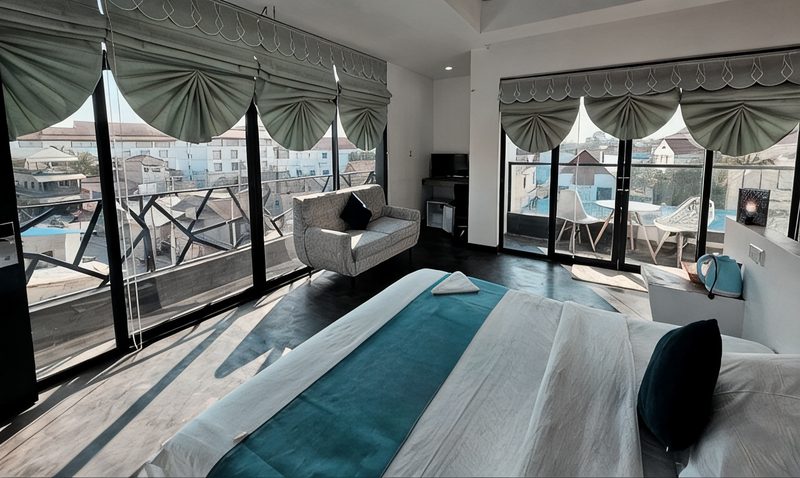
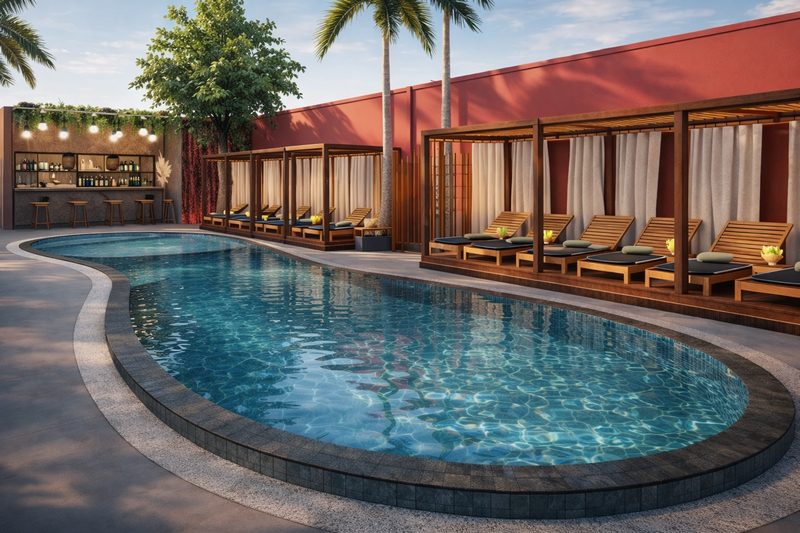
Where to Stay in Siem Reap in July
Hand-picked hotels across price tiers for July travellers.
Packing Checklist
Bookmark this page — your progress is saved between visits
Need the full list with shopping links?
Climate-specific gear, brand recommendations, and what to leave at home.
View Siem Reap Packing List →Essential Tips
Insider knowledge and common pitfalls to avoid
Insider Knowledge
East-facing temple facades catch the best early light. July's afternoon storms make morning the only reliable golden-hour window. Banteay Srei, Pre Rup, and Angkor Thom's eastern gopuras photograph dramatically before 8 AM. Angkor Wat's west-facing entrance suits rare clear late afternoons. The reflection shot works at either end of day. Mornings prove far more predictable in July.
Siem Reap's food scene has migrated away from Pub Street, which now caters largely to first-night tourists. The action sits around Kandal Village and alleys south of Phsar Chas, the Old Market. Khmer home-cooking spots there serve lok lak with lime-and-Kampot-pepper dipping sauce that dissolves on the tongue. They serve num banh chok, cold rice noodles in fish-and-lemongrass broth with raw banana flower and mint. Pub Street does not even attempt these.
Buddhist Lent begins in July. Temple ceremonies grow more frequent and elaborate. Arrive at any major pagoda by 6 AM on the full moon day. You will witness monks receiving alms and chanting in a predawn scene for locals only. Dress modestly. Stay quiet. You are welcome. The three Lent months also mean fewer monk-led blessings at tourist-facing sites, since ordained monks retreat.
Three-day and seven-day Angkor passes use facial recognition scanning. Your pass works even rain-soaked and unrecognizable by day three. This also makes each pass strictly non-transferable. You must present yourself at checkpoints, not just flash a card. Buy passes at the main ticket office on Apsara Road. Ignore anyone offering them elsewhere.
Avoid These Mistakes
Do not attempt the Grand Circuit in one morning push. Preah Khan, Neak Pean, Ta Som, East Mebon, Pre Rup. January's cooler air makes this ambitious but doable. July's 32°C (89°F) heat and 82% humidity make it a fast track to heat exhaustion. Split the circuit across two mornings. Return to air conditioning by 11 AM. Save afternoons for cooking classes, the circus, or the hotel pool. Your body will thank you by day three.
Do not wear flip-flops or smooth-soled sandals to the temples because it looks tropical. Wet laterite paths and rain-slicked sandstone stairs prove treacherous. The steep Baphuon climb involves uneven stone steps with no railing and a drop that ends trips in hospitals. Proper closed-toe shoes with rubber tread represent your single most important gear decision.
Do not write off Siem Reap because forums label July rainy season and stop there. The reality differs. Rain concentrates in afternoon bursts. Mornings stay clear and cool enough for comfortable exploration. Full moats, dramatic skies, and empty corridors make Angkor more atmospheric and photogenic than its dusty, packed dry-season self. You trade weather certainty for a different, arguably more compelling experience.
Short on time? See day trips around Siem Reap on GetYourGuide.
Ready to plan your trip to Siem Reap?
Now that you've got the research covered, here's where to go next.
Explore More Activities in Siem Reap
Didn't see anything interesting yet?
Browse Viator's full catalog of tours, day trips, food experiences, and private guides in Siem Reap.
See All Siem Reap Tours on Viator