
Things to Do in Siem Reap in August
August weather, activities, events & insider tips
Low Season · Budget Friendly
August Weather in Siem Reap
Long-run averages for August
89°F (32°C)
High Temp
77°F (25°C)
Low Temp
8.8 inches (224 mm)
Rainfall
80%
Humidity
13
Sunny-Day UV
⚠ Monsoon downpours can dump intense rainfall in short periods, temporarily flooding low-lying roads in Siem Reap town and making unpaved routes to outlying temples impassable for hours. Avoid motorbike rentals unless you are an experienced rider comfortable on flooded and muddy surfaces.
⚠ Dengue fever risk spikes during August and September. Monsoon rain leaves standing water across Siem Reap province. That standing water breeds Aedes mosquitoes. Apply DEET or picaridin repellent consistently at dawn and dusk. Sleep in air conditioning. Use treated nets. Seek medical attention immediately if you develop any sudden high fever with severe headache or joint pain.
⚠ Lightning hits often during August afternoon storms. Strikes threaten open ground, elevated temple platforms, and the Tonle Sap lake surface. Descend from any elevated temple structure. Move away from water at the first sign of an approaching electrical storm.
Making the most of August in Siem Reap? Browse tours and activities in Siem Reap on GetYourGuide.
Is August Right for You?
Weigh the advantages and considerations before booking
Advantages
- + Angkor Wat's moats fill to the brim during August. The jungle wrapped around Ta Prohm and Preah Khan turns a shade of green so saturated it looks digitally enhanced. The sandstone temples, slick with rain, photograph with a depth and moodiness that dry-season visitors simply never see. You'll get compositions at Bayon's stone faces with storm clouds rolling behind them. These belong in a gallery, not a phone album.
- + August is deep low season in Siem Reap. The difference is tangible. Where December and January pack the Angkor Wat sunrise platform shoulder to shoulder, August mornings might have a few dozen people scattered across it. Ta Prohm, the temple most visitors know from the strangler fig shots, is almost meditative before 9 AM. Accommodation rates tend to drop significantly below high-season levels. You'll likely find yourself upgraded at check-in simply because rooms are sitting empty.
- + The Tonle Sap lake is expanding rapidly through August as monsoon water feeds in from the Mekong reversal, one of the planet's most extraordinary hydrological events. The floating villages of Kompong Khleang and Chong Kneas sit in deep water now. The birdlife along the flooded forest edges is at its most concentrated. Spot-billed pelicans, painted storks, and grey-headed fish eagles cluster in the treetop canopy above water that was dry land four months ago.
- + The Siem Reap countryside transforms into a continuous carpet of flooded rice paddies through August. Cycling or driving through it in the early morning, when mist lifts off the water and farmers are knee-deep planting seedlings, is one of the most honest glimpses of rural Cambodia you can get. The air smells like wet earth and green growth. The light before the clouds build has a soft, almost pearlescent quality that burns off by mid-morning.
Considerations
- − The rain is real and sometimes aggressive. August averages 8.8 inches (224 mm) of rainfall. Much of it falls in concentrated afternoon and evening downpours rather than all-day drizzle. Those storms can stall outdoor plans for two to three hours. The unpredictability is the harder part: some days are clear until 4 PM, others open up before noon. There is no reliable way to predict which you'll get on a given morning.
- − Humidity sits around 80% and you will feel it in your bones. Walking the grand circuit at Angkor in August means sweat-soaked clothing within thirty minutes. The combination of wet heat and slippery laterite steps at temples like Pre Rup and Phnom Bakheng demands real caution. Your camera lens will fog the moment you step from an air-conditioned tuk-tuk into the open air. It takes a full minute to clear.
- − Some of the more remote temple sites and dirt-road routes become difficult or impassable after sustained rain. The road to Beng Mealea, the jungle-consumed temple about 68 km (42 miles) east of Siem Reap, is paved now and fine. Smaller tracks to sites like Koh Ker can turn to red-mud slicks that test even experienced drivers. Mosquitoes are also at their wet-season peak. Dengue is a genuine concern in Siem Reap province through August and September.
Settled on August? Compare hotel prices in Siem Reap for your dates on Trip.com.
Best Activities in August
Top things to do during your visit
August drops Siem Reap into the heart of its monsoon rhythm. Afternoon storms roll in most days. A sudden drop in wind announces them. The sky shifts from white haze to bruised grey in minutes. The rain arrives heavy and warm, hammering the tin roofs of Old Market stalls and sending streams of rust-colored water along the gutters of Sivatha Boulevard. Temperatures hold steady around 32°C through the day, easing only to about 25°C after dark. The air between downpours carries the green, loamy smell of soaked laterite and wet vegetation. The city receives roughly 224 millimeters of rain across the month, less than September's peak but enough to keep the moats around Angkor Wat brimming and the surrounding forest canopy dense and dripping. This is Siem Reap's genuine low season. Visiting now means navigating the temples with far fewer people on the causeways. The western tourists thin out considerably. The tour buses that clog the Angkor Thom south gate in December are largely absent. Tuk-tuk drivers have time to talk. Guesthouse owners negotiate. Restaurant kitchens along Pub Street send the sharp, caramelized scent of palm sugar and prahok drifting across half-empty dining rooms. Locals move through August with practiced ease, carrying umbrellas or simply waiting out the rain under corrugated awnings, emerging the moment the downpour lifts to resume the day. The countryside beyond the temples transforms. Rice paddies flood a luminous jade green. The Tonle Sap begins its annual swelling. The dirt roads to outer temple groups like Beng Mealea turn soft and ochre. Siem Reap in August rewards travelers who pack a waterproof bag and a willingness to let the rain set the schedule. Where to stay in Siem Reap during the wet months becomes a more interesting question than in high season, because hotels and guesthouses are emptier and rates drop. The neighborhoods east of the river, around Wat Bo Road, put you within walking distance of the night markets. You'll be close enough to hear the tinny pop songs drifting from the bars along Pub Street without being inside the noise. For a three-day Siem Reap itinerary in August, the trick is to start temple visits by 6:30 a.m., when the stone is cool to the touch and the light through the eastern galleries of Angkor Wat cuts golden across the bas-reliefs, then return to town by early afternoon before the rain hits. Evenings belong to the restaurants south of the Old Market, where the sour tang of green mango salad and the char of grilled freshwater fish on bamboo skewers define the local table. Beyond Angkor, Siem Reap holds its own: the Angkor National Museum, the silk farms on the road to Tonle Sap, and the Cambodian circus Phare are all undercover activities that a rainy afternoon serves well.

Siem Reap Angkor Airport Taxis (from Airport to Hotel)
transportThe road from Siem Reap Angkor International Airport into town runs about seven kilometers through flat scrubland and past the first scattered guesthouses of the airport corridor, a ride that takes twenty to thirty minutes depending on traffic. This airport taxi transfer eliminates the scrum of drivers outside the arrivals hall, where the warm, fuel-tinged air and competing shouts can overwhelm a traveler stepping off a flight from Phnom Penh or Bangkok. A driver meets you at the terminal with your name on a sign, loads your bags into an air-conditioned sedan, and delivers you to your hotel door with no negotiation, no meter anxiety, and no detours.
A prearranged pickup removes the single most stressful moment of arriving in a new Cambodian city, after a long-haul connection.
Insider tip: Book the transfer for the return trip as well and confirm the pickup time the night before through your hotel reception, because morning departures from Siem Reap hotels can run late if the driver is not confirmed directly.
This month: August afternoon storms can slow airport road traffic and reduce visibility, so allow extra buffer if your flight lands between 14:00 and 17:00.

Private 3-Days tour at comfortable areas
guided_experienceThree days with a private guide through Siem Reap and the Angkor Archaeological Park transforms a temple visit from a checklist into a narrative. This tour sequences the major sites so each day builds on the last: the first morning might begin at Angkor Wat itself, where the smell of damp moss rises from the stone as you trace the Churning of the Sea of Milk bas-relief with your fingertips along the outer gallery. The second and third days push outward to Banteay Srei, where the pink sandstone carvings are so fine they look like pressed lace, and to the jungle-wrapped corridors of Ta Prohm, where silk-cotton tree roots grip the lintels like enormous grey fingers. A private vehicle and guide mean you set the pace, skip what does not interest you, and linger where it does.
A three-day private structure lets you absorb the scale and detail of the Angkor complex without the fatigue and confusion of rushing the circuit in a single day.
Insider tip: Ask your guide to schedule Banteay Srei on the first morning when your energy is highest, because the thirty-kilometer drive north is the longest transit and the carvings demand close, patient attention in the early light.
This month: August's lower visitor numbers mean your guide can position you at popular photo spots like the Ta Prohm tree-root doorway without the usual fifteen-minute wait for other groups to clear.

From Siem Reap: Angkor Wat and Floating Village 3-Day Trip
day_tripThis three-day trip from Siem Reap pairs the stone temples of Angkor with the waterborne world of the Tonle Sap floating villages, two landscapes that explain Cambodia from opposite directions. You spend the temple days walking the raised causeways and dim inner sanctuaries of the Angkor complex, where the cool stone underfoot and the faint echo of your steps through empty corridors create a quiet that the exterior heat makes all the more striking. Then the itinerary pivots to the lake, where stilted houses rise from tea-brown water and the air smells of drying fish and diesel from the long-tail boats that serve as the village bus system. The combination grounds the temples in the living culture that built them.
Seeing both Angkor and Tonle Sap on a single guided itinerary connects the monumental past to the present-day water communities that most visitors never reach.
Insider tip: Bring a bandana or scarf to cover your nose on the boat ride through the floating village, where the fish paste drying operations along the water produce a pungent, fermented smell that catches first-timers off guard.
This month: August's monsoon rains raise the Tonle Sap significantly, meaning the floating villages sit in deeper, more navigable water and the boat ride covers a wider expanse of the lake than during the dry months.

Private Temples Guided Tour (Angkor Wat, Ta Prom & Angkor Thom)
culturalA single-day private guided tour of Angkor Wat, Ta Prohm, and Angkor Thom covers the three temples that define Siem Reap's archaeological identity, each one distinct in mood and architecture. Angkor Wat in the early morning light is all verticals: the five lotus-bud towers rising above the long reflecting pool, the steep stairs worn smooth by centuries of feet, and the gallery walls where apsara dancers are carved in sandstone so you can feel the folds of their sampots with your thumb. Ta Prohm shifts the register entirely, its corridors half-consumed by the roots of strangler figs that creak audibly in the wind. Angkor Thom closes the day at the Bayon, where two hundred stone faces gaze outward from every tower with the same faint, knowing smile.
These three temples represent the full arc of Khmer architecture, from classical symmetry at Angkor Wat to nature's reclamation at Ta Prohm to the enigmatic portraiture of the Bayon.
Insider tip: Enter Angkor Thom through the east gate rather than the south gate to avoid the tour bus bottleneck, and ask your driver to park near the Terrace of the Elephants so you can walk the Bayon approach on foot through the quiet northern grounds.
This month: Wet-season clouds diffuse the harsh midday sun, making the carved bas-reliefs at Angkor Wat easier to photograph without blown-out highlights, and the surrounding moat reflects a dramatic sky.

Private One-Way Arrival/Departure Transfer (REP airport and Siem Reap town).
otherA private one-way transfer between Siem Reap Angkor International Airport and your hotel is the simplest logistical fix for either end of a Cambodia trip. The vehicle is air-conditioned, the driver tracks your flight, and the short ride into the center of Siem Reap passes through the flat outskirts where sugar palms line the road and the laterite dust turns to paved streets near the river. For departures, the pickup from your hotel removes the guesswork of finding a metered tuk-tuk at five in the morning, when the streets are dark and the only sound is roosters and the distant hum of early temple-bound traffic.
At the lowest price point of any private transfer in Siem Reap, this one-way ride solves the airport connection without overpaying or bargaining at the curb.
Insider tip: If you are departing Siem Reap on an early morning flight, confirm the pickup time directly with the driver via the phone number provided in your booking confirmation rather than relying solely on the hotel front desk to relay the message.

2-Day Private Angkor Wat, Floating Village & Countryside Tour
guided_experienceTwo days split between the Angkor temples and the countryside beyond them give a fuller portrait of Siem Reap than the temples alone ever could. The first day moves through the main Angkor circuit, where the sandstone glows amber in the morning and the galleries of Angkor Wat smell of old rain and incense left by Buddhist monks who still pray at the central shrine. The second day pivots to a floating village on the Tonle Sap and the surrounding countryside, where ox carts move along raised dikes between flooded rice paddies and the air tastes faintly of woodsmoke from cooking fires in stilted farmhouses. The countryside leg often includes stops at local silk-weaving workshops, where the clack of wooden looms provides a rhythmic counterpoint to the quiet of the temple corridors the day before.
This two-day pairing covers both the monumental and the rural sides of Siem Reap Province, giving context that a temple-only visit cannot.
Insider tip: Wear shoes that can get muddy for the countryside day, because the paths around the floating village dock and the rice paddy dikes turn slick after rain, and flip-flops will not hold on the wet clay embankments.
This month: August water levels on the Tonle Sap make the floating village more photogenic and accessible by boat, with the houses fully afloat rather than perched on exposed stilts as they appear in the dry season.
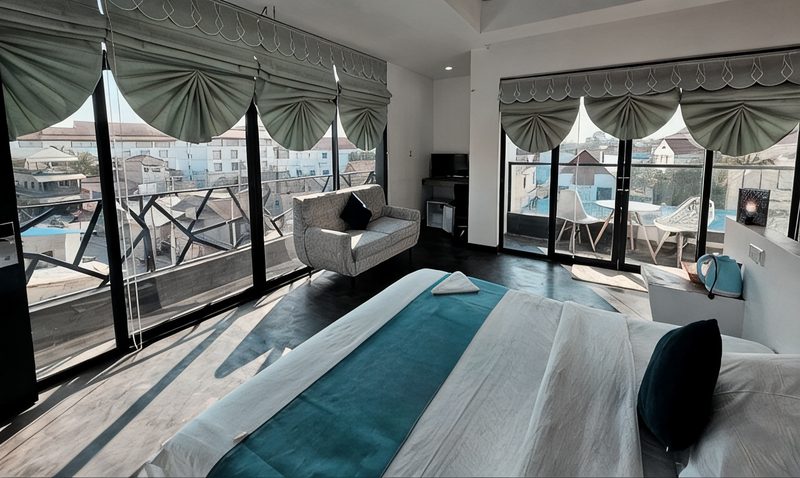
Where to Stay in Siem Reap in August
Hand-picked hotels across price tiers for August travellers.
Packing Checklist
Bookmark this page — your progress is saved between visits
Need the full list with shopping links?
Climate-specific gear, brand recommendations, and what to leave at home.
View Siem Reap Packing List →Essential Tips
Insider knowledge and common pitfalls to avoid
Insider Knowledge
The Angkor temple complex in August rewards a reversed schedule that most visitors never consider. Skip the dawn rush at Angkor Wat entirely. Start your morning at Banteay Kdei or Ta Som on the grand circuit. You might be the only person in the gallery at 7 AM. Save Angkor Wat for late afternoon. The western-facing facade catches golden light after the storms clear. The crowds have already bussed back to town. The post-rain light at Angkor Wat between 4:30 and 5:30 PM is unmatched. The sandstone is still dark with moisture. Steam rises off the causeway stones. This is the most atmospheric hour this temple offers in any month.
Siem Reap's nightlife along Pub Street and the surrounding alleys intensifies in low season. The bars and restaurants compete harder for fewer visitors. The stretch between the Old Market and Pub Street fills up after 9 PM even in August. The cocktail bars on the quieter lanes off Sivatha Boulevard are considerably less crowded than their December equivalents. Try the second-floor open-air places where you can watch the street below. The night market on Sivatha is worth walking through. Go for the smell of grilled skewers and the sound of competing Bluetooth speakers alone. Buy nothing if you prefer.
The food in Siem Reap during wet season differs slightly from what you would eat in the dry months. Pay attention. August markets carry an abundance of water spinach, green peppercorns still on the vine, and freshwater fish from the rising Tonle Sap. The fish amok you eat in August, if the kitchen is sourcing locally, will likely use snakehead or catfish pulled from floodwater that morning. The green peppercorn that goes into the kroeung paste has a sharp, almost floral heat. Dried peppercorn cannot replicate this. Eat at Psar Chas in the morning. The produce stalls are still wet from the predawn delivery. The fried noodle vendors have fresh oil in the wok.
Rent a tuk-tuk driver for the day. Skip booking individual rides. The relationship you build over eight or ten hours produces a different experience. Stop where you want. Adjust the route when rain hits. Let the driver suggest their own favourite temple or lunch spot. This beats point-to-point transport. August drivers are less stretched than in peak season. They are more willing to go off the standard circuit. Negotiate a day rate in the morning. Confirm the route. Let them wait in the shade while you explore. Most drivers know the temples better than any guidebook. They have been driving the circuits for years. Ask genuine questions. They will tell you things no written guide includes.
Avoid These Mistakes
Trying to see the entire Angkor complex in a single day regardless of weather is a mistake. The grand circuit alone covers temples spread across roughly 400 sq km (154 sq miles). Attempting to sprint through it in August heat and humidity leads to exhaustion, dehydration, and a resentful blur of sandstone. Everything looks the same by temple number six. Two days is the minimum for the small and grand circuits together. Three days lets you absorb what you are seeing. Angkor is not a checklist.
Packing only flip-flops and expecting them to work everywhere is dangerous. The temple stairs at Pre Rup, Ta Keo, and Phnom Bakheng are steep, narrow, and lethally slippery in the rain. Every wet season, tourists fall and injure themselves on steps that would be manageable with proper footwear. Bring real shoes with grip. Wear them to every temple. Save the sandals for town.
Assuming rain cancels the day and retreating to the hotel is a missed opportunity. August rain in Siem Reap tends to come in concentrated bursts, often between 1 PM and 4 PM, and then clear to gorgeous late-afternoon skies. Shelter at a cafe or restaurant during the downpour. Read a book for an hour. Then head back out. You will often get the best light and emptiest temples of the entire day. The travelers who give up when the rain starts miss the best part.
Short on time? See day trips around Siem Reap on GetYourGuide.
Ready to plan your trip to Siem Reap?
Now that you've got the research covered, here's where to go next.
Explore More Activities in Siem Reap
Didn't see anything interesting yet?
Browse Viator's full catalog of tours, day trips, food experiences, and private guides in Siem Reap.
See All Siem Reap Tours on Viator